Печать
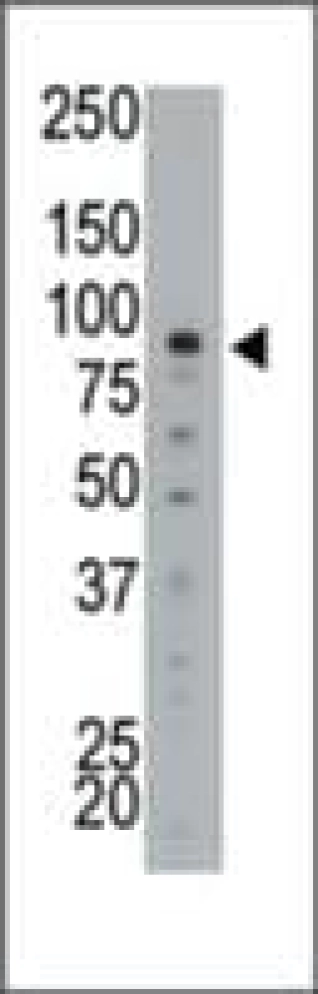
ANTI-MTMR2 (N-TERM)
Кат. №: SAB1300358-100UG
Производитель: Sigma-Aldrich
Кол-во:
Цена по запросу
Товар оформляется под заказ
Печать
ANTI-MTMR2 (N-TERM)
Кат. №: SAB1300358-100UG
Производитель: Sigma-Aldrich
Кол-во:
Цена по запросу
Товар оформляется под заказ
Кол-во:
Цена по запросу
Товар оформляется под заказ
Description_x000D_
General description_x000D_
The MTMR2 gene encodes a member of the myotubularin family, characterized by the presence of a phosphatase domain. Mutations in the myotubularin gene (MTM) cause X-linked myotubular myopathy. Northern blot analysis reveals that the 4-kb MTMR2 mRNA is expressed ubiquitously. The mouse Mtmr2 gene encodes a 643-amino acid protein that shares 97% sequence identity with the human protein. Mouse Mtmr2 dephosphorylates phosphatidylinositol 3-phosphate (PI3P) and phosphatidylinositol 3,5-bisphosphate (PI3,5P2), most effectively at neutral pH. This is distinct from the activity of myotubularin, which only acts on PI3P. Analysis of MTMR2 mutations associated with Charcot-Marie-Tooth disease type 4B (CMT4B1) show markedly diminished phosphatase activity, suggesting that this activity is crucial for the proper functioning of peripheral nerves. MTMR2 mutations may lead to malfunction of neural membrane recycling, membrane trafficking, and endo- and exocytic processes. Loss-of-function mutations in MTMR2 are associated with the CMT4B phenotype. MTMR2 interacts with MTMR5, and mutations in the coiled-coil domain of either MTMR2 or MTMR5 abolish this interaction. Through this interaction, MTMR5 promotes enzymatic activity of MTMR2 and prescribe subcellular localization._x000D_
Immunogen_x000D_
MTMR2 (NP_003903, 7-35)_x000D_
This antibody is generated from rabbits immunized with a KLH conjugated synthetic peptide selected from the N-terminal region of human MTMR2._x000D_
Physical form_x000D_
Purified polyclonal antibody supplied in PBS with 0.09% (W/V) sodium azide.
Related Categories
Alphabetical Index, Antibodies, MS-MUD, Primary Antibodies conjugate
Дорогой клиент, на сайте внедрена нейросеть для сбора информации о товаре. Это может привести к незначительным расхождениям в характеристиках продукции.