Печать
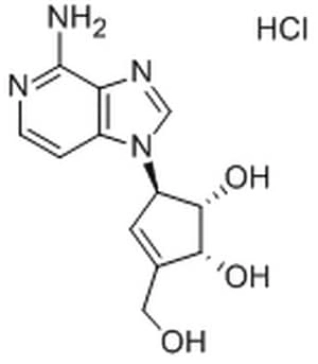
Histone Methyltransferase EZ 1PC X 2MG
Кат. №: 252790-2MG
Производитель: Sigma-Aldrich
Кол-во:
Цена по запросу
Товар оформляется под заказ
Печать
Histone Methyltransferase EZ 1PC X 2MG
Кат. №: 252790-2MG
Производитель: Sigma-Aldrich
Кол-во:
Цена по запросу
Товар оформляется под заказ
Кол-во:
Цена по запросу
Товар оформляется под заказ
Description
General description
A cell-permeable compound that is shown (at 1 µM concentrations) to inhibit EZH2-mediated trimethylation of K27 on histone H3 and induces the expression of cell-cycle regulatory genes, p21 and p27, as well as the cell death regulator, FBXO32, in OCI-AML3 and HL-60 cells, whereby treatment with inhibitor increases p16 levels in the former, but not the latter of the two cultures. At concentrations between 200 nm and 2000 nM, this compound is found to dose-dependently deplete the expression of polycomb group proteins EZH2, SUZ12, and EED in cultured and primary AML cell extracts. At concentrations up to ≥ 1000 nM, DZNep dose-dependently increases the percentage of apoptotic cells up to > ~ 38%, with greater potency against OCI-AML3 than HL-60 cultures and inhibits colony growth up to > ~ 85% for both cell lines. In OCI-AML3 cultures, 1000 nM of treatment demonstrates a significant increase in the accumulation of cells in the G0/G1 phase (58.5%) with a concomitant decrease in the number of cells in S phase (35.2%) and G2/M phases (6.3%) of the cell cycle. When co-treated with panobinostat (PS), 200 nM to 1000nM DZNep is shown to decrease cell viability in OCI-AML3 and HL-60 cultures more effectively than DZNep alone, in a dose-dependent manner. DZNep (1mg/kg, twice per week, i.p.) and PS significantly prolong the survival of mice implanted with HL-60 cells compared to treatment with either compound alone. DZNep is also a known S-adenosyl-L-homocysteine (AdoHcy) hydrolase inhibitor. Also available as a 25 mM solution in H2O (Cat. No. 506069).
A cell-permeable compound that is shown (at 1 µM concentrations) to inhibit EZH2-mediated trimethylation of K27 on histone H3 and induces the expression of cell-cycle regulatory genes, p21 and p27, as well as the cell death regulator, FBXO32, in OCI-AML3 and HL-60 cells, whereby treatment with inhibitor increases p16 levels in the former, but not the latter of the two cultures. At concentrations between 200 nm and 2000 nM, this compound is found to dose-dependently deplete the expression of polycomb group proteins EZH2, SUZ12, and EED in cultured and primary AML cell extracts. At concentrations up to ≥ 1000 nM, DZNep dose-dependently increases the percentage of apoptotic cells up to > ~ 38%, with greater potency against OCI-AML3 than HL-60 cultures and inhibits colony growth up to > ~ 85% for both cell lines. In OCI-AML3 cultures, 1000 nM of treatment demonstrates a significant increase in the accumulation of cells in the G0/G1 phase (58.5%) with a concomitant decrease in the number of cells in S phase (35.2%) and G2/M phases (6.3%) of the cell cycle. When co-treated with panobinostat (PS), 200 nM to 1000nM DZNep is shown to decrease cell viability in OCI-AML3 and HL-60 cultures more effectively than DZNep alone, in a dose-dependent manner. DZNep (1mg/kg, twice per week, i.p.) and PS significantly prolong the survival of mice implanted with HL-60 cells compared to treatment with either compound alone. DZNep is also a known S-adenosyl-L-homocysteine (AdoHcy) hydrolase inhibitor.
Packaging
2 mg in Glass bottle
Packaged under inert gas
Warning
Toxicity: Standard Handling (A)
Physical form
Supplied as a hydrochloride salt.
Reconstitution
Following reconstitution, aliquot and freeze 9-20°C). Stock solutions are stable for up to 3 months at -20°C.
Other Notes
Fiscus, W., et al. 2009. Blood13, 2733.; Description
Quality Level
100 assay
Дорогой клиент, на сайте внедрена нейросеть для сбора информации о товаре. Это может привести к незначительным расхождениям в характеристиках продукции.