Печать
SFTPD,HUMAN
Кат. №: SRP6343-100UG
Производитель: Sigma-Aldrich
Кол-во:
Цена по запросу
Товар оформляется под заказ
Печать
SFTPD,HUMAN
Кат. №: SRP6343-100UG
Производитель: Sigma-Aldrich
Кол-во:
Цена по запросу
Товар оформляется под заказ
Кол-во:
Цена по запросу
Товар оформляется под заказ
Description_x000D_
General description_x000D_
SFTPD (surfactant protein D) is a Ca2+-binding, large multimeric hydrophilic protein, which is produced by type II pneumocytes and club cells. It lines the alveolar epithelium. It is a member of collectins (collagen-containing C-type lectins) which are involved in innate responses._x000D_
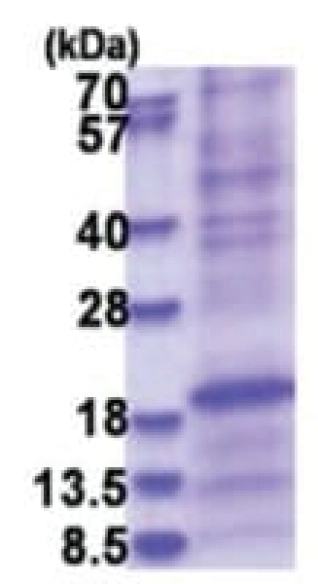
SFTPD, as known as Surfactant pulmonary-associated protein D, is a member of the collectin family of C-type lectins that is synthesized in many tissues including respiratory epithelial cells in the lung, and contains one C-type lectin domain and one collagen-like domain. It is humoral molecules of the innate immune system, and is considered a functional candidate in chronic periodontitis. It is also involved in the development of acute and chronic inflammation of the lung. Several human lung diseases are characterized by decreased levels of bronchoalveolar SFTPD. Recombinant human SFTPD protein, fused to His-tag at N-terminus, was expressed in E.coli._x000D_
SFTPD (surfactant protein D) encodes an extracellular soluble protein that is expressed in the mucosal membrane. The SFTPD gene is mapped to human chromosome 10q22.3._x000D_
Biochem/physiol Actions_x000D_
SFTPD (surfactant protein D) protein is thought to decrease inflammatory responses in alveolar macrophages and oxidant production, and increase apoptotic cell clearance. Elevated serum levels of this protein function as biomarker for susceptibility to COPD (chronic obstructive pulmonary disease). It is involved in the pathogenesis of COPD, and certain polymorphisms in this gene are linked with changes in its serum level and lung function. In human bronchoalveolar lavage, SFTPD is the predominant protein involved in antiviral response against seasonal strains of influenza A virus (IAV). Studies in mice show that the neck and carbohydrate recognition domain (NCRD) of this protein confers protection against allergy and respiratory syncytial virus infection. Variations in this gene are linked with lung function measures in context of tobacco smoking. Hence, this protein has potential as a biomarker for subclinical tobacco smoke-induced lung damage._x000D_
Physical form_x000D_
1 mg/mL in 20 mM Tris-HCl buffer (pH 8.0) containing 10% glycerol, and 0.4 M Urea.
biological source
human recombinant
Дорогой клиент, на сайте внедрена нейросеть для сбора информации о товаре. Это может привести к незначительным расхождениям в характеристиках продукции.